 Jonny Greenwood
Ensemble Scoring & Skinned Themes
published in The Wire online, July, 2026, London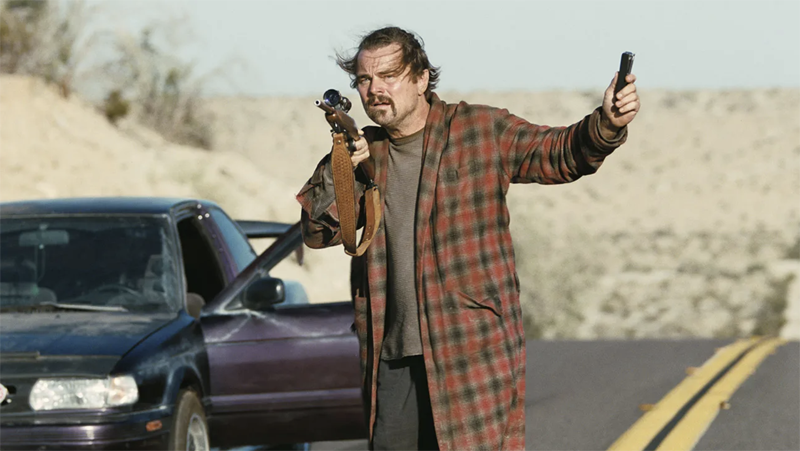
It’s hard to qualify how Jonny Greenwood’s commissioned score operates in P.T. Anderson’s One Battle After Another (2025). Not because the music is vague, indistinct or haphazard, but because it’s so deeply embedded in the story’s tight dramaturgy. It never feels like it’s accompanying anything. The music doesn’t come from the movie: it resides within the movie. This is the purported theoretical role of film music — to be wedded to everything onscreen — but such audiovisual consummation is mostly over-rationalised while making grand claims of emotional evocation. Greenwood’s score pushes against such forced marriage, and his score is a series of miniatures stretched beyond any modest length, temporally extended through hesitancy and separation. Notes more than chords; points more than gestures.
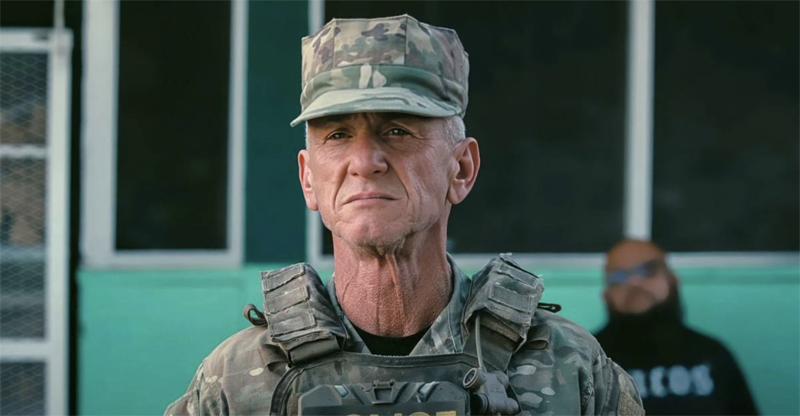
One Battle After Another boasts an impressive ensemble cast, and the film continues Anderson’s focus on how actors enable a film to reveal its energies — something he learnt from Orson Welles’ adoption of a stock company. This entails theatre mechanisms, especially in pre-production, through chemistry reads, group dynamics and character interplay. Sean Penn likened his method for the film to “hearing the music of (his) character”, pondering how Anderson wrote the Colonel Lockjaw character for Penn to “hear the character that way”. One Battle After Another is a prime example of how a director functions like a conductor, and actors transform themselves into sensing instruments.
This accounts for Greenwood’s role in the film’s group-oriented staging. He provides Anderson a range of possibilities within which the director finds shape, direction and purpose. It’s a type of displaced compositional strategy; a bi-fluxional method, where the composer is imagining what might be the musical environment in the director’s mind from which he could then construct a scene. Audited in isolation, the score feels like a mirage of a traditional recital: a largish ensemble, accentuated violin lines, studied percussive patterns, and dexterous piano-playing, all ebbing and flowing with impressive dynamic range. While cinema fetishizes ‘orchestrality’ as a cheap sign of performative quality, Greenwood’s orchestration is activated by textural exploration — not in expanded or improvisational form, but as semiotic reference. Orchestral grandeur is here demoted to being entrained by the prosaic machinations of human drama and its endless cycle of fight-or-flight pulsation.
The film’s early theme “One Battle After Another” is tentatively built from a piano’s single note modulating through thrummed chords. Its cautious tone is decimated by a loud and sudden burst of a full string section shadowing the piano chords. This irrational dynamic matches the lo-fi amateur stealth of the terrorist group French 45, as we watch Perfidia (Teyana Taylor) and Pat (Leonard DiCaprio) prepping for their attack on a border detention camp. Yet the music is bereft of dangerous heroics and full of regret, as if it knows what will be the consequences of Perfidia and Pat’s actions. I’m reminded of how Charles Ives’ The Unanswered Question is a deep well of conflicting emotions through its time-lagged and harmonically-displaced logic, via its wind instruments whose hive mind seems to be sited in another dimension. Greenwood’s theme here similarly finishes with trembling notes like waves lapping at an uncertain shoreline.

Like most of the cues throughout One Battle After Another, the opening theme runs long and across multiple scenes, and returns twice more. The result is a score shaped through triaxial statements, with themes versioned up to three times, each sounded to reveal something more about the characters’ pressures. (The cues’ official titles only match one of their accompanying scenes.) Metallic cymbal tones created by the violins’ stacked harmonics (“Baktan Cross 1”) sizzle as the terrorist crew creep toward a border crossing station. An orchestral drone swells, combined with passing trucks, dragged chain-link gates and night crickets. In this sound world, Perfidia first encounters Colonel Lockjaw (Penn). The music seems to sonify their charged environment and the brooding fog of unleashed adrenaline germane to dangerous pursuits. But the music synchs to something more disturbing: Perfidia lectures Lockjaw (“Free borders! Free choice! And free from fear!”) while forcing his penile arousal, mind-fucking his racist supremacist core while getting hot herself.
Later when Lockjaw discovers that Perfidia has Pat as her boyfriend, a maddening tick-tocking theme is activated (“French 75”). Rendered by a slightly prepared piano tapping a woodpecker waltz with woodblocks simulating a metronome, the notes idly dance up the keys and down again. Infantile, tentative, nervously staccato, it simulates a child’s hand — disturbingly so, as the theme trails Lockjaw’s shark eyes and craggy mask as he closes in on Perfidia, eventually encountering her in the toilet as she is wiring a bank with explosives. The theme will be repeated again, intensifying the ‘pleasure trauma’ of Lockjaw’s psychosexual rage and Perfidia’s orgone accumulation.

The menacingly erotic image of a fully pregnant Perfidia firing a Russian machine gun, crowning her exposed belly with its magazine and screaming in joy, is accompanied by gunfire that obliterates the soundtrack. It is followed by a gentle baroque theme played on classical guitar (“For Willa”) which plays over a montage of Perfidia and Pat’s decaying relationship, culminating in her walking out on Pat and their newborn child, Charlene. The guitar feels church-like, but Perfidia is more Tony Montana than Lady Madonna, spitting at Pat “This is a new consciousness.” Tied to a hospital bed after being captured following a botched bank robbery, she faces Lockjaw dangling the prospect of eluding jail time if she rats on members of The French 75. The funereal tonality of “Trust Device” commences, played by ondes Martenot and high strings as she confronts her own will to survive at the expense of her family. The theme continues as Pat preps to go completely underground with his baby daughter. Both themes are instigated by Perfidia; both perform as a sorrowful ‘human Sanctus’ — Perfidia’s “new consciousness” — as her liberating actions tragically impact others.
But as Pat departs, the music transforms into a warm lilt with light bossa rhythms tapped underneath, “Baby Charlene”. Distant hope is connoted. It carries over Perfidia being relocated to a witness protection home, implying even hope for her, and symbolically tying mother and daughter together despite their impossible union. Greenwood’s cues are not simply ‘emotive’. Rather, they are dynamically interrelational, in accordance with the overall group interplay of the ensemble and their characters. Individuals are less activating than their relationships. This characterises how his cues don’t evolve as much as they shed their skin. They often devolve through repelled transitions, as if they can’t bear their own emotional weight. “Baby Charlene” is skinned to reveal a rising chorale of strings as Lockjaw discovers that Perfidia has escaped. Close in on his weathered scowl as he reads her sarcastic note “This pussy won’t pop for you.”

This brings us to the half-way mark of One Battle After Another. The aforementioned ‘triaxial’ distribution of cues multiple times in different scenes continues, deepening psychic drive and widening emotional composure in all the characters. Notably, the second half of the film shuttles 16 years later to the present, causing the music to resonate with the past. The opening piano theme returns in a deconstructed form as “Perfidia Beverly Hills” when Lockjaw has been accepted into the white supremacist Christmas Adventurers Club. A piano ostinato lumbers while strings rise and twist like a Bartokian ecosystem of fungal harmonic growth. Siren-like portamento ascents aerate the strings’ harmonic progression, pushing them upwards from an orchestral floor to an ecstatic canopy of upper register climes. It’s neither ironic nor cynical; it feels despairing of how nihilistic the control and display of power can be — titled after Perfidia, but describing the psychosexual ruin left in her wake.
Bob receives a phone call as Plan Snap Crackle Pop springs into action, but Bob is high and can’t recall the codes and prepared rendezvous points (“I Need The Greeting Code”). Herrmannesque strings wind around him like a stoner smoke haze — just like the tear gas that will engulf him as he crawls through his escape tunnel. Once he surfaces in the woods, a thumping piano cue starts, “Ocean Waves (Pt.1)”. It’s a very long cue, ratcheting the temporal shrinkage of all Bob must undertake in order to elude Lockjaw’s pursuit and reunite with Willa. Itching piano notes percolate as Bob desperately tries to remember the secret codes. They continue over the extended scene of Bob meeting karate sensei Sergio (Benicio de Toro) who will be aiding his flight. The scene flits throughout the labyrinth of Sergio’s Sanctuary City multi-floored home as he prepares his multitude of refugees to escape while Bob desperately tries to remember those passwords on his charging cell phone. As an ICE team break into the building, toms tap ¾ time atop the piano pecking and occasional orchestral jitters. It’s like the orchestra is being told by the piano to not play. The instrumentation evokes Charles Ives reinterpreting Japanese Gagaku court music, here shorn of any exoticist seduction and rendered fretful and agitated.

Tackling P.T. Anderson’s commissioned scores requires substantial analysis. For now, this essay cannot venture further with One Battle Another. Elsewhere I’ve written overly long breakdowns of Jon Brion’s score for Magnolia (1999) and Greenwood’s score for Inherent Vice (2015). However next month’s essay will consider two uncredited Brion tracks (not on the Nonesuch release) used at formative and conclusive moments in One Battle After Another, and unravel Brion’s legacy in Anderson’s approach to commissioning music.
Text © Philip Brophy 2026. Images © Warner Bros.
hyper material for our very brain

All contents © Philip Brophy with great pain of taking.
Please accept offensive behaviour.
We have safety but for children.