
 Hibiki Inamoto
Rumbling Stomachs & Discotheque Chandeliers
published in The Wire online, May, 2026, London
Tokyo, 2005. Inside a white stretch limousine with a peach-haired poodle perched on a cushion, an elegant woman is reading a newspaper headline: “Over 30,000 suicides seven years in a row.” The mise-en-scène snapshots post-Bubble Japan in the early 2000s: people half in denial of the economic downturn, and half hustling to make money while others spiral into destitution. The woman being chauffeured is Kazuko Hosoki (Erika Toda), Japan’s most famous fortune teller since debuting in 1982, en route to taping one of her TV shows. Straight To Hell (2026) is a 9 part series for Netflix Japan, chronicling Hosoki’s rise and fall over fifty years.
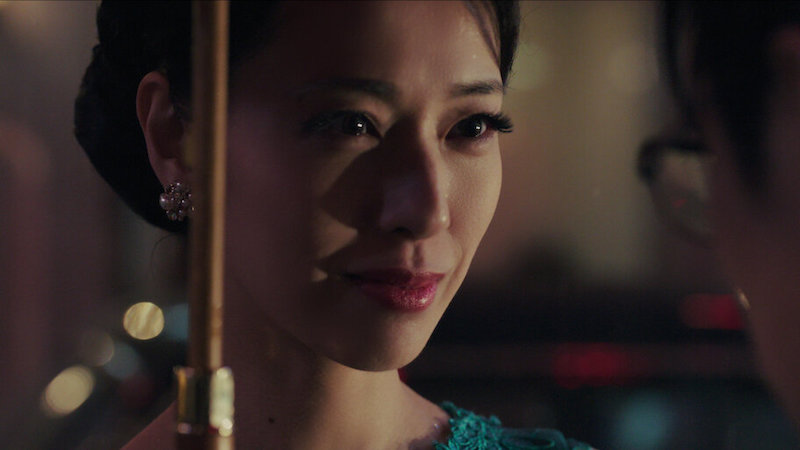
A strapping orchestral waltz spins on the soundtrack, embellished with upper octave tinkling playing the same notes as the strings. The music feels mocking, viciously so. The score is by Hibiki Inamoto, who has worked with the series’ main director, Tomoyuki Takimoto on four films previously. The Straight To Hell score benefits from their collaborative relationship, as Inamoto finds powerfully imaginative ways to conduct a musical portrait of a complex character like Hosoki. The early orchestral waltz (“Snake Woman”) is intermittently interrupted by the noisy interloping of an erhu. To put it bluntly, it just doesn’t fit. Its reverb is displaced from the warm strings, yet it overwhelms them. Its melodic tow is full of contortions, causing the resonant frequencies to bite as the erhu squeals. When Hosoki arrives at a TV station to do one of her infamously arrogant readings of celebrities, her demeanour is captured as haughty and regal. Her glamour is the strings; her soul is the coruscating erhu.
A similar tack was employed by Toru Takemitsu with his score to Masahiro Shinoda’s Silence (1971), where courtly Baroque lutes and harps lull, only to be decimated by what almost sounds like a Derek Bailey acoustic guitar solo. Takemitsu’s score perfectly captures the feudal Japanese response to Jesuit Christian indoctrination in 17th Century Nagasaki: he presents European harmony as a corrupting experience, transfiguring its crusade of Western harmony as an alien noisescape. The difference is that Inamoto’s opening theme (which will crop up with equal dissonance throughout Straight To Hell) is about not a singular psychotic disposition, but the sonic energy which propels Hosoki to be so vicious.
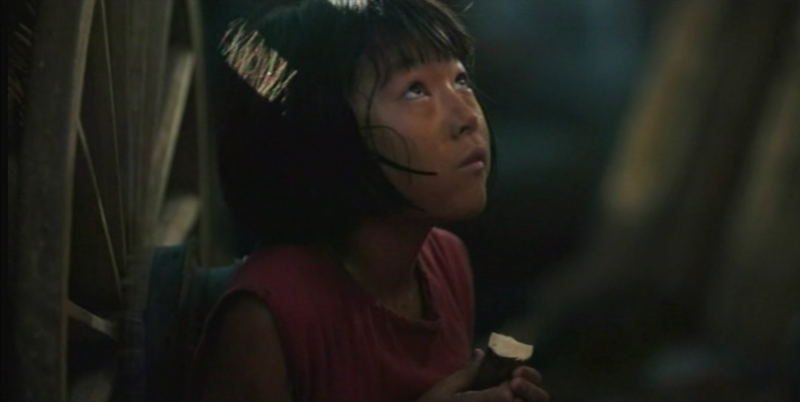
Backstory always contextualises trauma, and a chunk of Straight To Hell depicts young Hosoki’s life with her three siblings and widowed mother: first in 1946 surviving the aftermath of the Great Tokyo Fire Raid, then in 1955 once her mother has started up an oden stew shop in the downtown black market district. In these scenes, a Gorecki-like mournful tone is dripped by cellos and horns (“Burnt Field”), but lingering somewhere is always that erhu. Its timbre persists with an ethnographic vagueness—sometimes evoking the scorching tones of a Japanese biwa, other times the wailing of a Turkish clarinet. Its sound is always out of place, never fitting in, never welcomed or accommodated—which describes Hosoki, the vulgar street child, always hungry, always grabbing from those who have food in their bellies. The sound of her rumbling stomach as a child is often heard: maybe the erhu is the sonic essence of her hunger.
The first time we see a celebrity humiliated on Hosoki’s TV show, a secondary main theme is introduced. It’s wonderfully weird: faux-Anatolian hammered dulcimer twanging, a tersely twisting digeridoo, plus a disco kick pulse! This is the official title theme “Straight To Hell”. This spikey theme relates to the savage thrill Hosoki seems to gain from tearing people apart—live on air, breaking all Japanese cultural protocols. Its gleefully aberrant mix of cultural appropriation and musicological dispassion signifies a different take on ‘world music’: once your own world has been destroyed, maybe you care little for those who wax lyrical about keeping the ‘world’ alive. This is the deep central vein of psychological drama in Straight To Hell, and Inamoto’s arrangements and choice of instrumentation respond to this through-line.
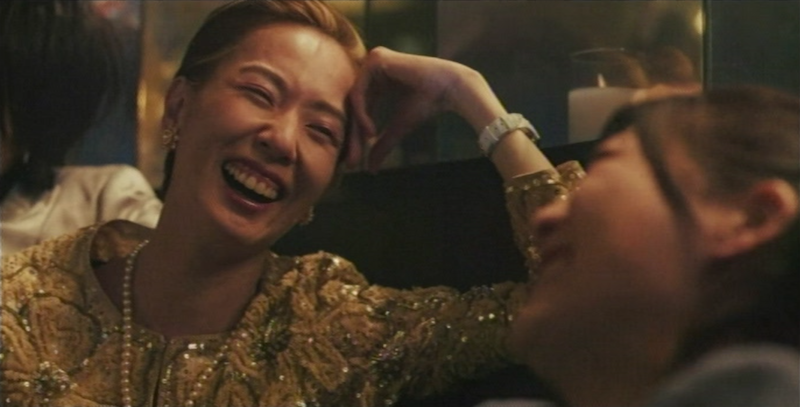
At other moments, the theme is perverted into “Switch First Night”, twisting the “Straight To Hell” theme into a digitally corrupted banger. The disco kick is rendered Techno as sub-sonic rumblings and glitches spit the pulse into the surround sound mix. It sounds like someone fidgeting with a karaoke mic, tapping it to produce noisy thumps. Like many of the cues, the track’s placement within the narrative never properly fits—because Hosoki will always be an outlier despite her gaudy dress for success. “Switch First Night” appears in a 2005 sequence where she luxuriates in a male host club where she spends thousands of dollars on champagne. Hosoki has brought along the naïve Minori (Sairi Ito), a writer who is working on a biography of Hosoki (their discussions shape the series’ episodes). The raging noise around them fades into silence as Hosoki tells Minori: “With cash, you can treat men like toys. This is where I get my revenge on men.” In context of this scene, the deconstructed kick drum and wailing erhu combine to perfectly replicate Hosoki’s callous view of the hustling world around her and its extravagant displays.
Japan’s post-war recovery was fuelled by a maniacal drive to wield economic might following the nation’s failed imperial dreams of supremacy in the Greater East Asia War (we know it as WWII). Environmental, sociological and psychological devastation were left in the wake of this progress, as it churned through the post-Olympics rebuild of Tokyo in 1964 and the celebratory futurology of Osaka’s Expo ‘70. The profit charts kept their X-axes heading forever upwards, peaking with the famous Bubble Era of extreme Japanese affluence. It arguably coincided with America’s gradual downturn, which in turn made the Bubble Era a keen target of jealous US economists. This might seem irrelevant to the music of Straight To Hell but it isn’t. The series uses Japan’s modern economic history as a parade of stages upon which Hosoki enters, is impacted, and responds with increasing survivalist fervour. This psychological arc determines the contents of Inamoto’s music, which musically ‘dresses’ each stage with an unsettling hybrid of instruments and ethnographic collisions, which collectively reflect Japan’s fevered internationalist outlook. ‘World music’ to those in such a state is far from the ‘first world’ championing of the same.
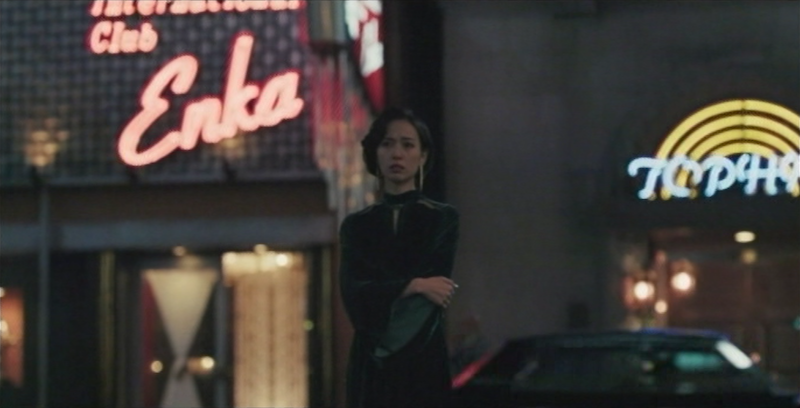
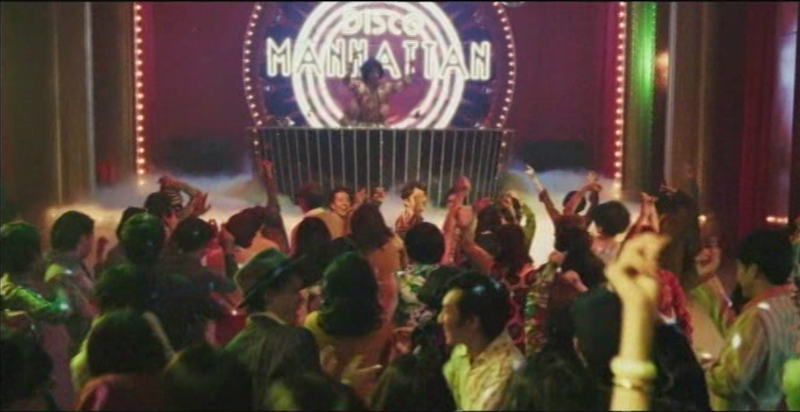
For those invested in the good, bad and ugly of ‘world music’, this is not new. But importing a rigorous sensibility of this mish-mash endemic to Japanese post-war culture onto the film soundtrack is fascinating. Straight To Hell’s chronology of Hosoki’s pursuits and ventures shifts from a small bar to a hostess club (White Glove) to a cabaret nightclub (Kazusa) to a yakuza-controlled venue (International Club Enka) to a discotheque (Manhattan Disco) to managing enka singer Chiyoko Shimakura (Toko Miura). The sourced music weaves a sly dance between enka ballads, Hollywood musicals and American Disco (the full use of all four minutes of Blood Sweat & Tears’ “Go Down Gamblin’” from 1971 for me was a high point). Inamoto’s score essences many elements from these musical styles and concocts strange brews for his cues.
The peak and cessation of Hosoki’s nightlife enterprises come during the Bubble Era, when the live club world was ruled by Juliana’s nightclub, sited in Minato City on the west edge of reclaimed land developments of Tokyo Bay. Between 1991-1994, the club was famous for catering mostly to women—at a time when Japan’s treatment of ‘OL’ (office ladies) in the workplace demonstrated a near-Feudal level of sexism. I’d like to say something more positive about this club music phenomenon, but the tracks deliriously spun there were a gaudy Venn overlay of Belgian Techno, Balearic Beat and Italo House. I call it ‘tropical chandelier’ Disco. However the numbing House-y pulses often bubbling underneath Inamoto’s music is not dated modish club traits, but an echo of how the Juliana-era club music inherited the Ibiza/Goa headiness and abandon which neutralized the mainstream nightclub experience at the time, rendering it a perfect sonic accoutrement for the nouveaux riches of Japan’s Bubble Era. “Distance of Hell” exemplifies this with its faux-gamelan Goa-Techno synth buzzing. It is later reversioned, overlaid with an exuberant shamisen solo replete with vocal yowls and hups. Inamoto excels with these squirming, agitated cues. As Hosoki justifies her showy, bitchy persona: “Half of it’s for show. The other is absolutely real”.
The score to Straight To Hell is best described as transfigured. It follows the contours of Hosoki who lives throughout time and space in a transfigured state, as if she is always stuck in a bombed-out black market zone (as per the poetic finale when she encounters her childhood self). Inamoto’s music scores her undying past, her irredeemable future, her contracting present. The score is ultimately contradictory, because music is beyond manipulation and control when it simultaneously signifies trauma and resilience: the nihilistic former and the positivist latter constitute two symbolic forces in music brought to bear on each other in a single composition. This is why contemporary film music can lean so heavily into ambivalence, unclarity, simultaneity and irresolution. Every action executed by Hosoki is brutally survivalist and committed to ruthless self-preservation. A post-war ‘hungry ghost’ empowered with intestinal fortitude, she inspires Inamoto’s ungainly and disturbed music.
Text © Philip Brophy 2026. Images © Netflix Japan
hyper material for our very brain

All contents © Philip Brophy with great pain of taking.
Please accept offensive behaviour.
We have safety but for children.